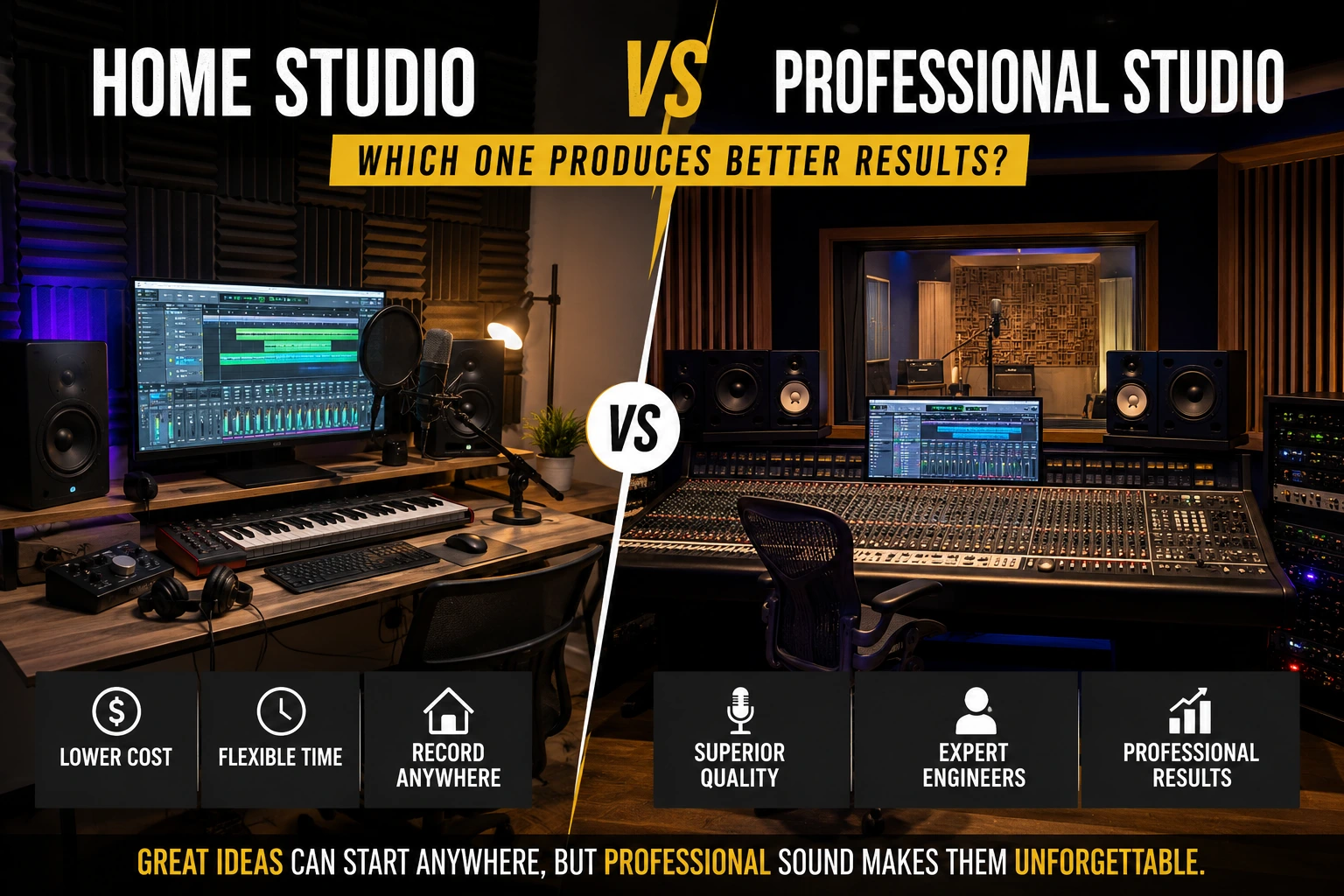
Home Studio vs Professional Studio is one of the most discussed topics among musicians, podcasters, singers, DJs, and content creators. With affordable recording equipment becoming more accessible, many creators wonder whether investing in a home setup is enough or if a professional recording studio still offers advantages that justify the cost.
The answer depends on your goals, budget, and the level of quality you want to achieve. While home studios provide flexibility and convenience, professional studios offer specialized equipment, acoustically treated rooms, and expert guidance that can significantly improve the final result.
In this guide, we’ll compare both options in detail to help you determine which setup is best for your next project.
Understanding a Home Recording Studio
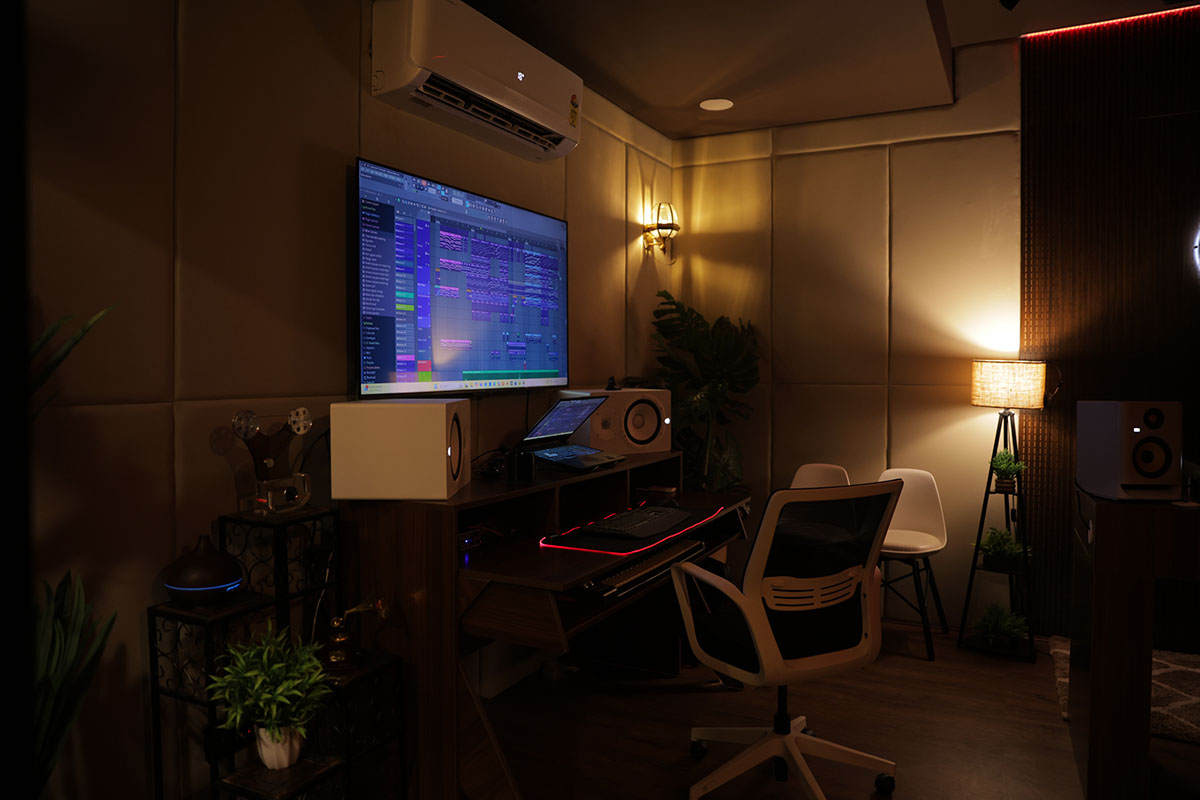
A home recording studio is a personal workspace designed for recording and producing audio. It can range from a simple laptop and microphone setup to a dedicated room filled with professional equipment.
Many independent artists choose a home recording studio because it allows them to create content whenever inspiration strikes. There are no hourly studio fees, and creators can experiment freely without worrying about time constraints.
Benefits of a Home Studio
Flexible Recording Schedule
One of the biggest advantages of a home studio is convenience. You can record at any time without booking sessions or traveling to a separate location.
Lower Initial Costs
For beginners, setting up a basic home recording studio can be more affordable than paying for frequent studio sessions.
Unlimited Practice Time
Artists can record multiple takes, experiment with new ideas, and improve their skills without feeling pressured by studio booking costs.
Ideal for Content Creators
Podcasters, YouTubers, voice-over artists, and beginner musicians often find home studios sufficient for creating regular content.
What Makes a Professional Studio Different?
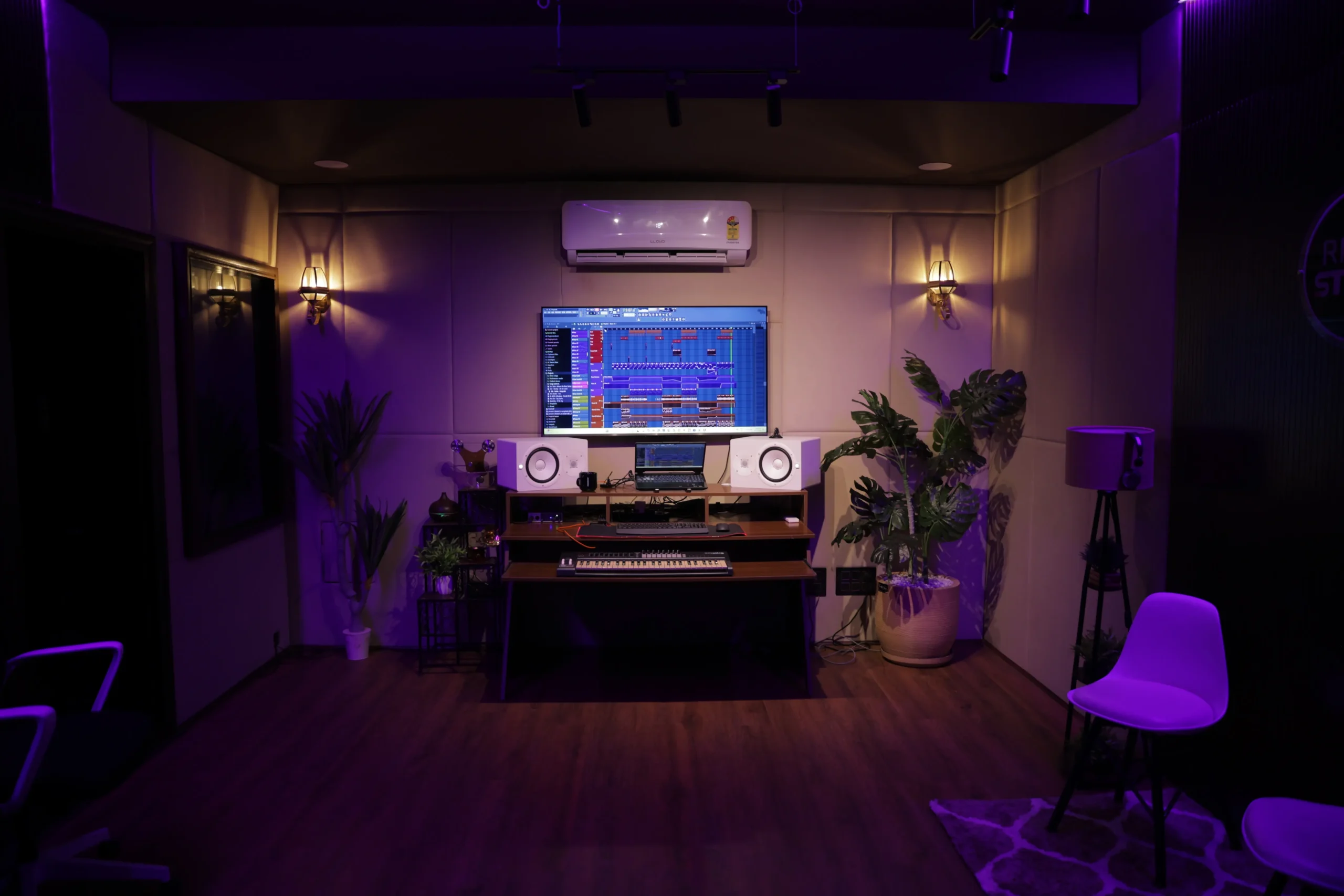
A professional recording studio is designed specifically for capturing, producing, mixing, and mastering high-quality audio. These facilities are built with advanced acoustic treatment, premium recording equipment, and experienced audio engineers.
Unlike a home setup, professional studios are optimized to deliver consistent and industry-level results.
Advantages of a Professional Recording Studio
Superior Sound Quality
Professional studios are engineered to eliminate unwanted noise, reflections, and acoustic issues.
This creates a cleaner recording environment and allows every detail of a performance to be captured accurately.
High-End Equipment
Professional recording studios invest in industry-standard microphones, preamps, monitors, and software.
The quality difference may seem subtle during recording, but it becomes much more noticeable in the final production.
Expert Audio Engineers
One major advantage of a professional recording studio is access to experienced engineers and producers.
These professionals understand microphone placement, gain staging, vocal recording techniques, mixing strategies, and mastering processes that help elevate a project.
Better Mixing and Mastering
Mixing and mastering require accurate monitoring environments.
Professional studios provide acoustically treated rooms that allow engineers to make precise decisions, ensuring the final track sounds great across headphones, speakers, cars, and streaming platforms.
Home Studio vs Professional Studio: Sound Quality Comparison
Recording Environment
The recording environment plays a crucial role in audio quality.
Most home studios struggle with room reflections, external noise, and acoustic inconsistencies. Even with acoustic foam and basic treatment, achieving professional-level acoustics can be challenging.
Professional studios are specifically designed to solve these problems through advanced acoustic engineering.
Equipment Quality
While many home studios use excellent microphones and software, professional facilities often provide access to equipment that would be expensive for individual creators to purchase.
This equipment helps produce cleaner recordings with greater depth and clarity.
Performance Coaching
In a professional studio, engineers and producers often provide real-time feedback.
This guidance can help singers improve vocal delivery, musicians refine performances, and podcasters achieve a more polished sound.
Home studio users typically handle these responsibilities on their own.
Cost Comparison
Home Studio Costs
Building a home studio requires an investment in:
- Microphone
- Audio Interface
- Headphones
- Studio Monitors
- Acoustic Treatment
- Recording Software
While the initial investment can be substantial, there are no ongoing hourly recording fees.
Professional Studio Costs
Professional studios charge per session, hour, or project.
Although the cost may be higher, creators gain access to premium equipment, professional engineers, and optimized recording spaces without having to purchase expensive gear themselves.
Which Option Is Better for Music Production?
The answer depends on your objectives.
A Home Studio May Be Best If:
- You’re just starting your creative journey.
- You need flexibility.
- You create content frequently.
- You enjoy learning audio production.
- You’re working with a limited budget.
A Professional Studio May Be Best If:
- You’re releasing commercial music.
- Audio quality is a top priority.
- You need professional mixing and mastering.
- You’re recording vocals or instruments for official releases.
- You want expert guidance throughout the production process.
Why Many Artists Use Both
Interestingly, many successful artists combine both approaches.
They use a home studio for songwriting, demos, practice recordings, and content creation. Once the project is ready for release, they move to a professional recording studio for final recording, mixing, and mastering.
This hybrid workflow provides the best balance between convenience and professional quality.
Frequently Asked Questions
Is a professional studio worth it for beginners?
Yes, especially if you’re recording an important project. Professional studios can help beginners achieve better results while learning from experienced engineers.
Can a home studio sound professional?
A well-designed home studio can produce excellent results. However, matching the acoustics, equipment, and expertise of a professional studio is often difficult.
Do famous artists use home studios?
Many artists use home studios for songwriting and demo production. However, final commercial releases are often completed in professional recording studios.
What is the biggest advantage of a professional studio?
The combination of acoustically treated rooms, premium equipment, and experienced engineers provides a level of consistency and quality that is difficult to replicate at home.
Is mixing and mastering better in a professional studio?
In most cases, yes. Professional studios offer accurate monitoring environments that help engineers make better decisions during the mixing and mastering process.
Conclusion
When comparing Home Studio vs Professional Studio, neither option is universally better. Home studios offer convenience, affordability, and creative freedom, while professional studios provide superior sound quality, expert guidance, and industry-standard production capabilities.
For creators who want the highest-quality results, a professional recording studio remains the preferred choice. However, combining a home studio for creativity and a professional studio for final production often delivers the best of both worlds.
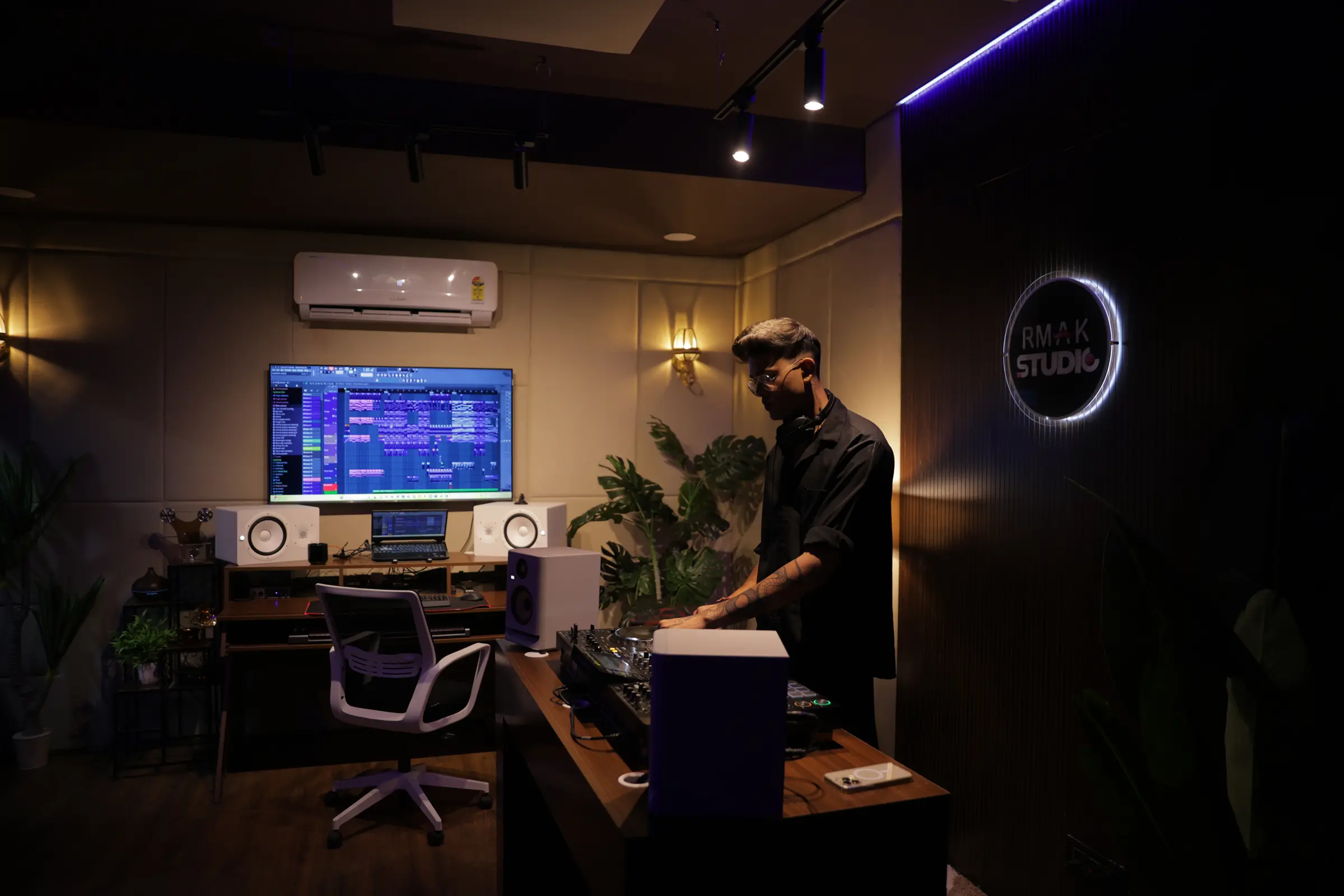
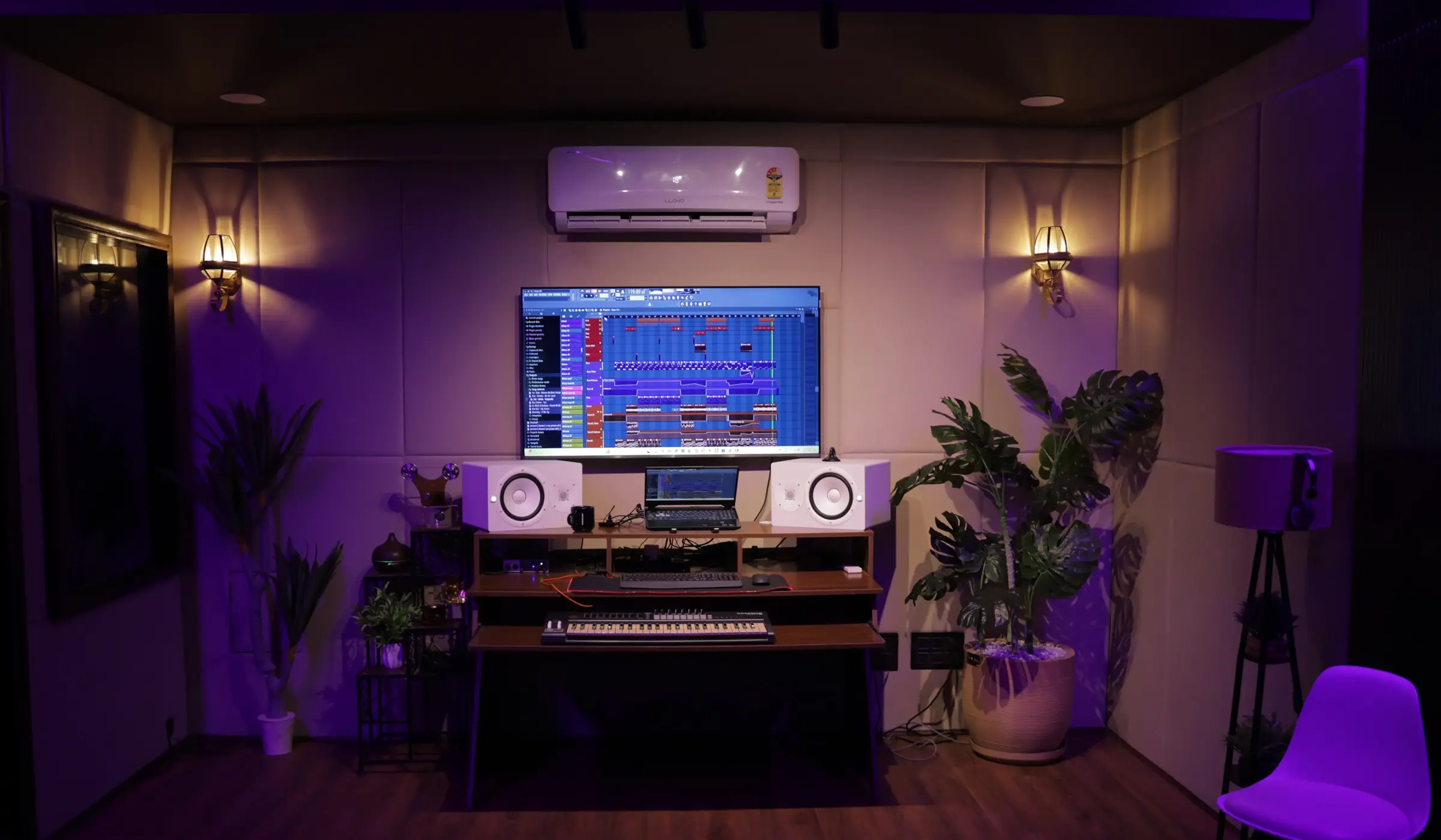
At RMAK Studio, we provide professional recording, music production, mixing, mastering, DJ recording, and podcast production services to help artists and creators achieve exceptional audio quality. Whether you’re producing your first track or your next major release, our team is ready to bring your vision to life.