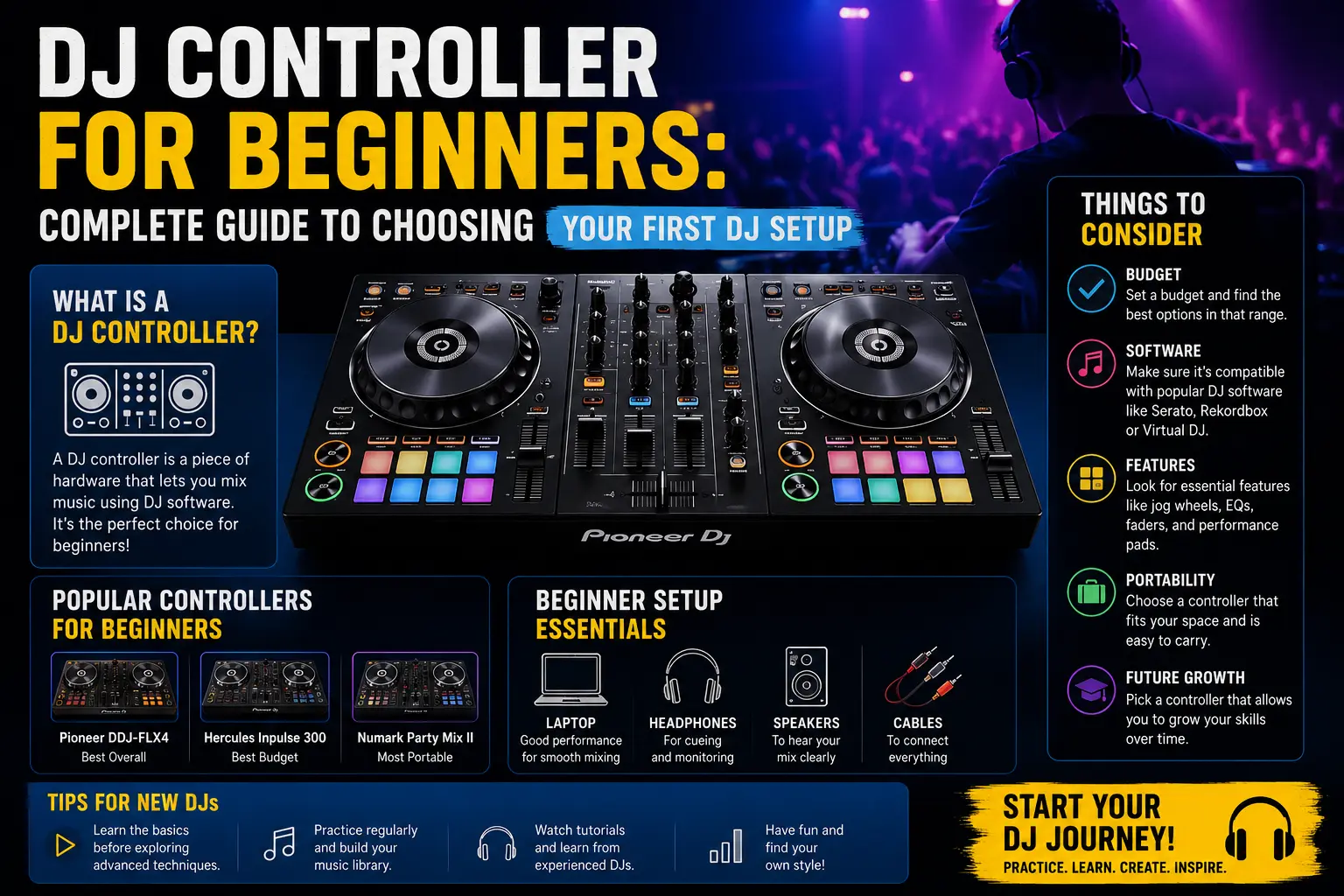
DJ Controller for Beginners is one of the most searched topics among aspiring DJs, and for a good reason. Starting your DJ journey can feel overwhelming when you see hundreds of controllers, software options, and equipment recommendations online.
Many beginners believe they need expensive gear to start DJing professionally. The truth is that choosing the right DJ controller matters far more than spending a huge amount of money. With the right beginner DJ equipment and proper training, anyone can learn the fundamentals of mixing, beatmatching, and live performance.
Whether you want to DJ at parties, become a professional performer, or simply explore music as a hobby, this guide will help you understand how to choose the right DJ controller for beginners and build a strong foundation for your DJ career.
If you’re interested in professional DJ training, don’t forget to explore our DJ Courses and Studio Services pages for hands-on learning opportunities.
What Is a DJ Controller?
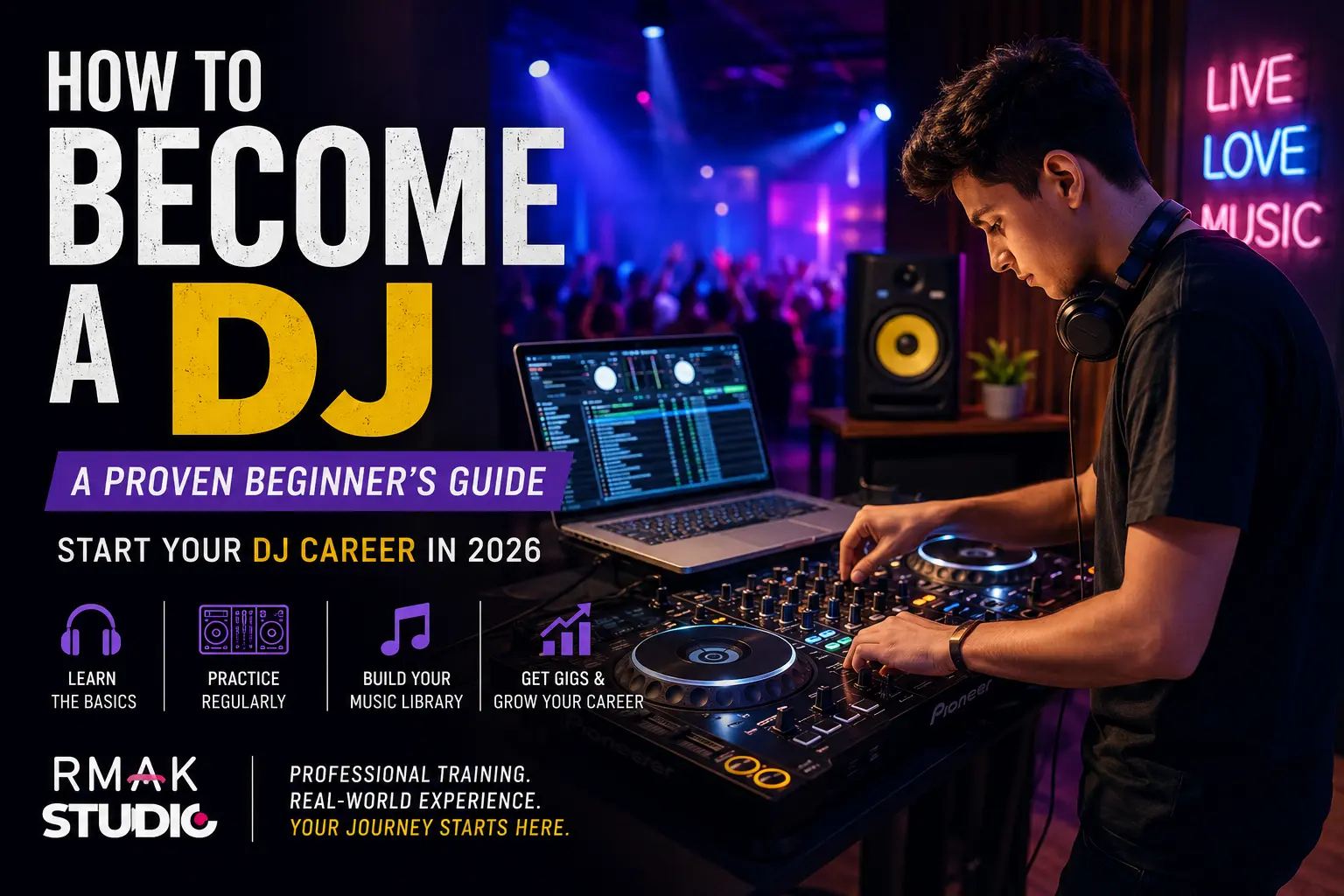
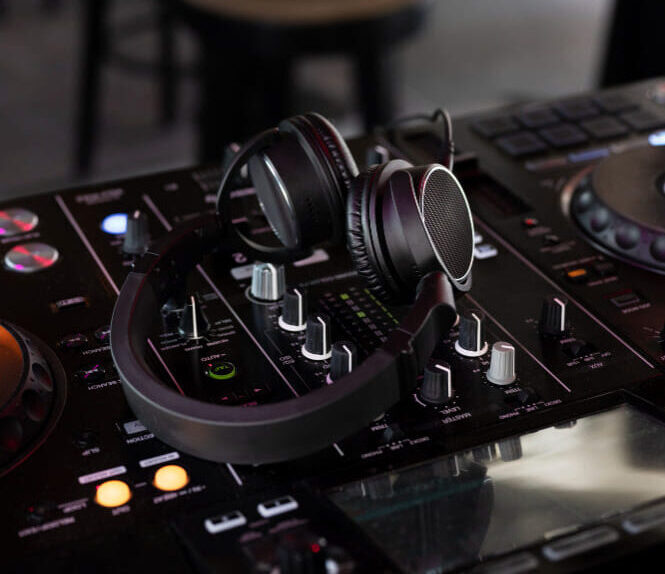
A DJ controller is a piece of hardware that allows DJs to control DJ software using physical knobs, buttons, jog wheels, and faders.
Instead of relying only on a computer screen, DJs can manipulate tracks in a more natural and creative way. Most modern controllers connect directly to a laptop and work with professional DJ software.
A typical DJ controller includes:
- Jog wheels
- Mixer section
- Channel faders
- EQ controls
- Performance pads
- Effects controls
- Cue buttons
For beginners, a controller acts as the central hub of their entire DJ setup.
Why Choosing the Right DJ Controller for Beginners Matters
The controller you choose can directly impact your learning experience.
A well-designed controller helps you:
- Learn faster
- Understand DJ workflows
- Build confidence
- Practice more efficiently
- Develop performance skills
Many new DJs make the mistake of purchasing advanced equipment that they don’t fully understand. This often creates frustration and slows down progress.
A beginner-friendly controller allows you to focus on learning the core skills that truly matter.
Features to Look for in a DJ Controller for Beginners
Before purchasing your first controller, it’s important to understand which features actually matter.
Jog Wheels
Jog wheels are used for scratching, cueing, and beatmatching.
Larger jog wheels generally provide better control and a more professional feel. Beginners should choose controllers with responsive jog wheels that allow smooth track manipulation.
Performance Pads
Performance pads unlock creative possibilities.
They can be used for:
- Hot cues
- Samples
- Loops
- Beat jumps
These features help beginner DJs experiment with live performance techniques.
Built-In Audio Interface
A built-in audio interface simplifies your setup.
It allows you to connect headphones and speakers directly to your controller without requiring additional hardware.
Most beginner DJ equipment today includes this feature, making setup much easier.
Software Compatibility
Not every controller works with every DJ software platform.
Popular software options include:
- Serato DJ
- rekordbox
- Virtual DJ
Before buying a controller, always check software compatibility.
Portability
If you plan to practice at different locations or perform at small events, portability becomes important.
Lightweight controllers are easier to transport and ideal for beginner DJs who are still building experience.
Common Mistakes Beginners Make When Buying a DJ Controller
Learning how to start DJing involves avoiding some common mistakes.
Buying Expensive Equipment Too Early
Many new DJs believe professional gear automatically makes them better performers.
In reality, skills matter far more than equipment.
Start with a controller that meets your needs and upgrade later when your experience grows.
Ignoring Software Compatibility
Some beginners purchase controllers without checking which DJ software they support.
This can lead to unnecessary expenses and compatibility issues.
Always verify software requirements before making a purchase.
Focusing Only on Appearance
A controller may look impressive online, but functionality should always come first.
Prioritize usability, learning features, and reliability over appearance.
Not Investing in Learning
Even the best DJ controller for beginners cannot replace proper education and practice.
Many aspiring DJs progress much faster when they combine equipment with structured DJ training.
DJ Controller for Beginners vs Professional DJ Setup
One question many students ask is whether they need a professional setup immediately.
The answer is no.
A beginner setup is designed to help you learn the fundamentals.
A professional setup is designed for advanced performances and larger events.
Key differences include:
Beginner Setup:
- Affordable
- Easy to learn
- Compact
- Portable
- Suitable for practice
Professional Setup:
- More advanced features
- Higher cost
- Larger equipment
- Designed for live performances
- Greater customization
For most new DJs, a beginner controller provides everything needed to build strong skills.
What Other Equipment Do Beginner DJs Need?
A DJ controller is only one part of a complete DJ setup for beginners.
Laptop
Most DJ software runs on a laptop.
Ensure your computer meets the recommended system requirements for smooth performance.
Headphones
Professional DJ headphones allow you to cue tracks privately before playing them through speakers.
This skill is essential for seamless transitions.
Speakers
Good speakers help you hear your mixes accurately and improve your overall performance.
Music Library
Building a quality music library is just as important as choosing the right equipment.
Organized playlists and carefully selected tracks help create better performances.
DJ Software
Your controller works alongside DJ software.
Learning the software thoroughly will improve your workflow and creativity.
Can You Learn DJing Without a DJ Controller?
Technically, yes.
You can learn music theory, DJ terminology, track structure, and mixing concepts without owning a controller. There are countless tutorials available online that explain the basics of DJing.
However, DJing is a practical skill.
Just like learning to drive requires time behind the wheel, learning DJing requires hands-on practice with real equipment.
A DJ controller helps you develop:
- Beatmatching skills
- Transition techniques
- EQ control
- Looping
- Cueing
- Live performance confidence
Without regular practice on actual equipment, it becomes difficult to master these essential skills.
This is why many aspiring DJs choose structured DJ training programs where they get access to professional equipment and expert guidance.
Should You Buy a DJ Controller or Join a DJ Course First?
This is one of the most common questions among aspiring DJs.
The answer depends on your goals and budget.
If you are completely new to DJing, enrolling in a DJ Course for Beginners can often be a smarter first step.
A professional DJ course provides:
- Hands-on training
- Access to industry-standard equipment
- Structured learning
- Personalized feedback
- Networking opportunities
- Performance practice
Many students purchase expensive equipment before understanding how to use it effectively. As a result, the equipment often remains unused.
Learning first and investing later is usually a better approach.
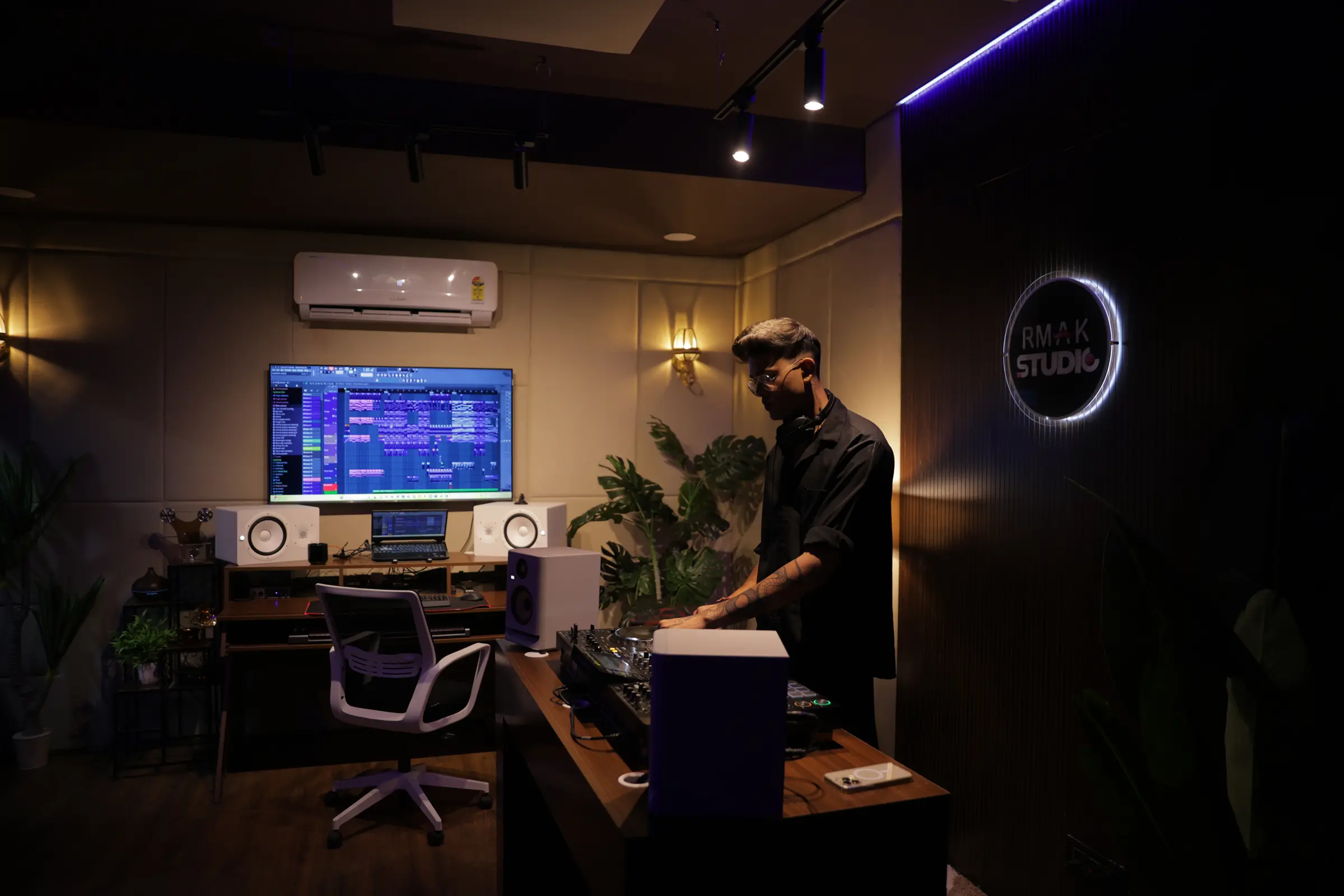
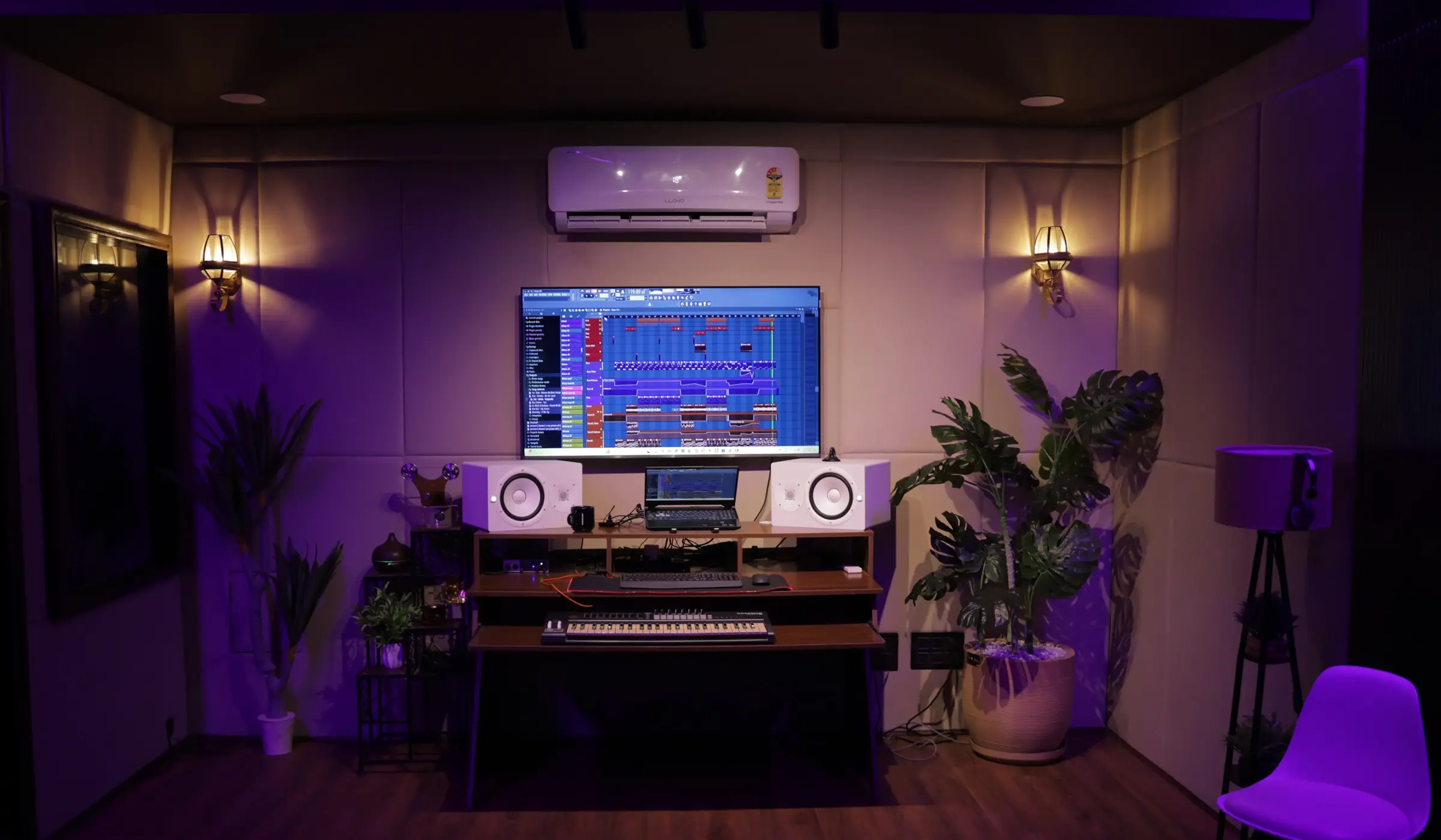
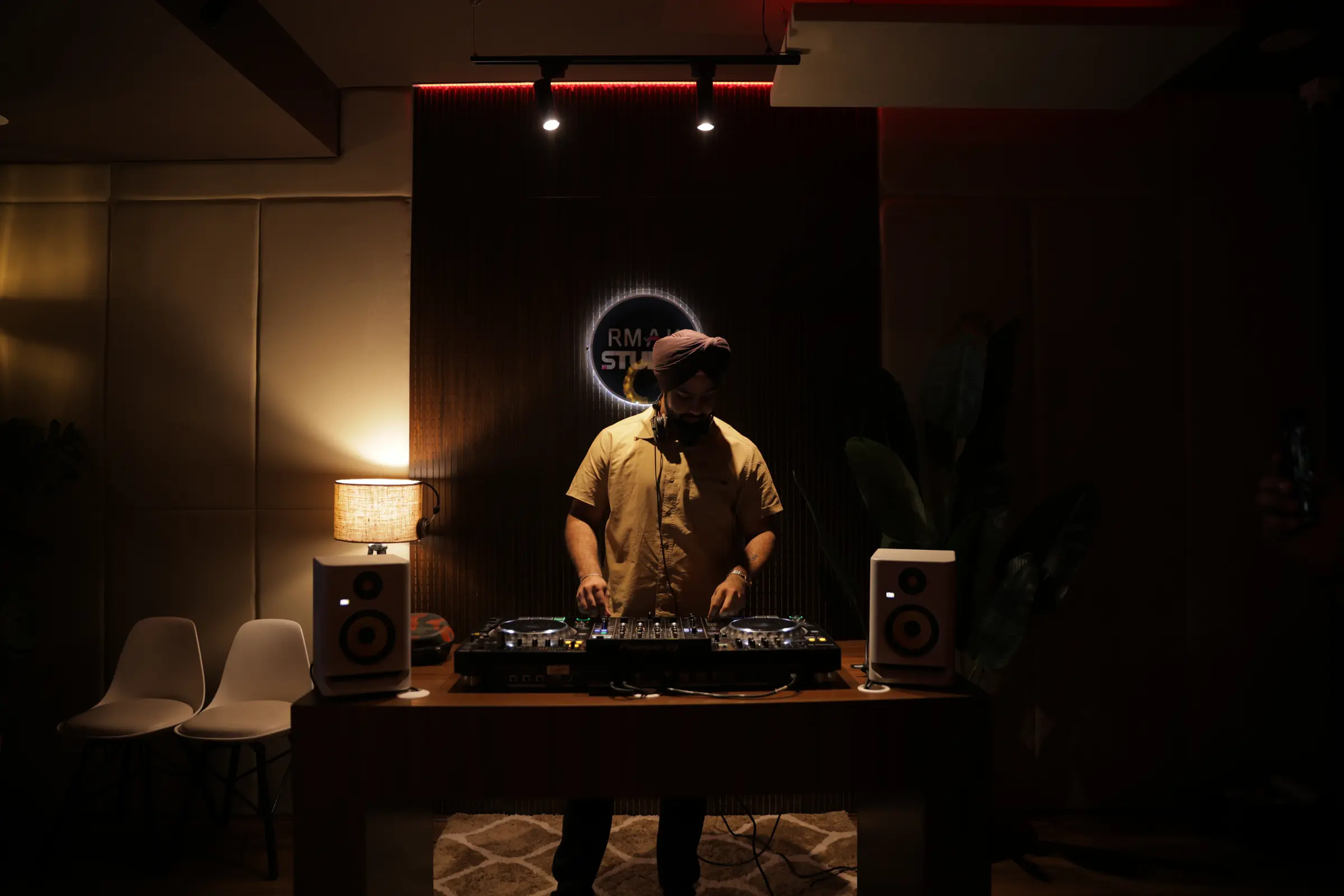
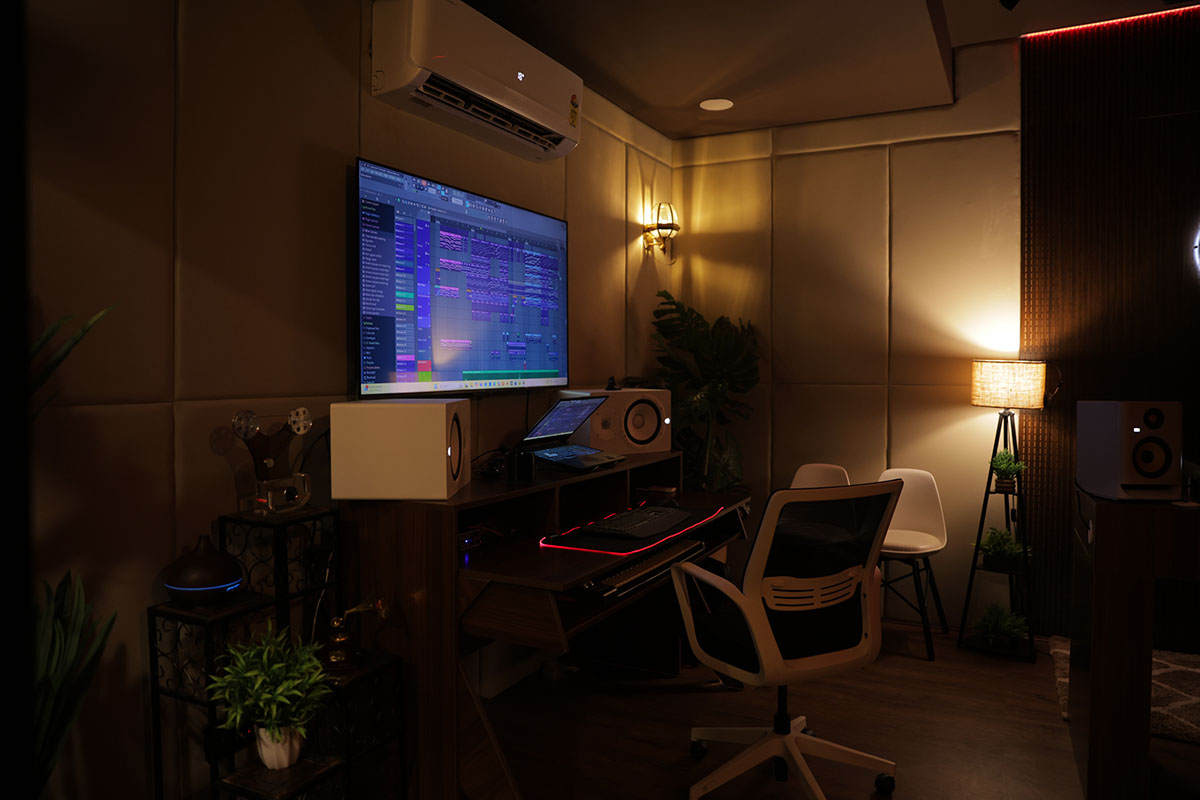
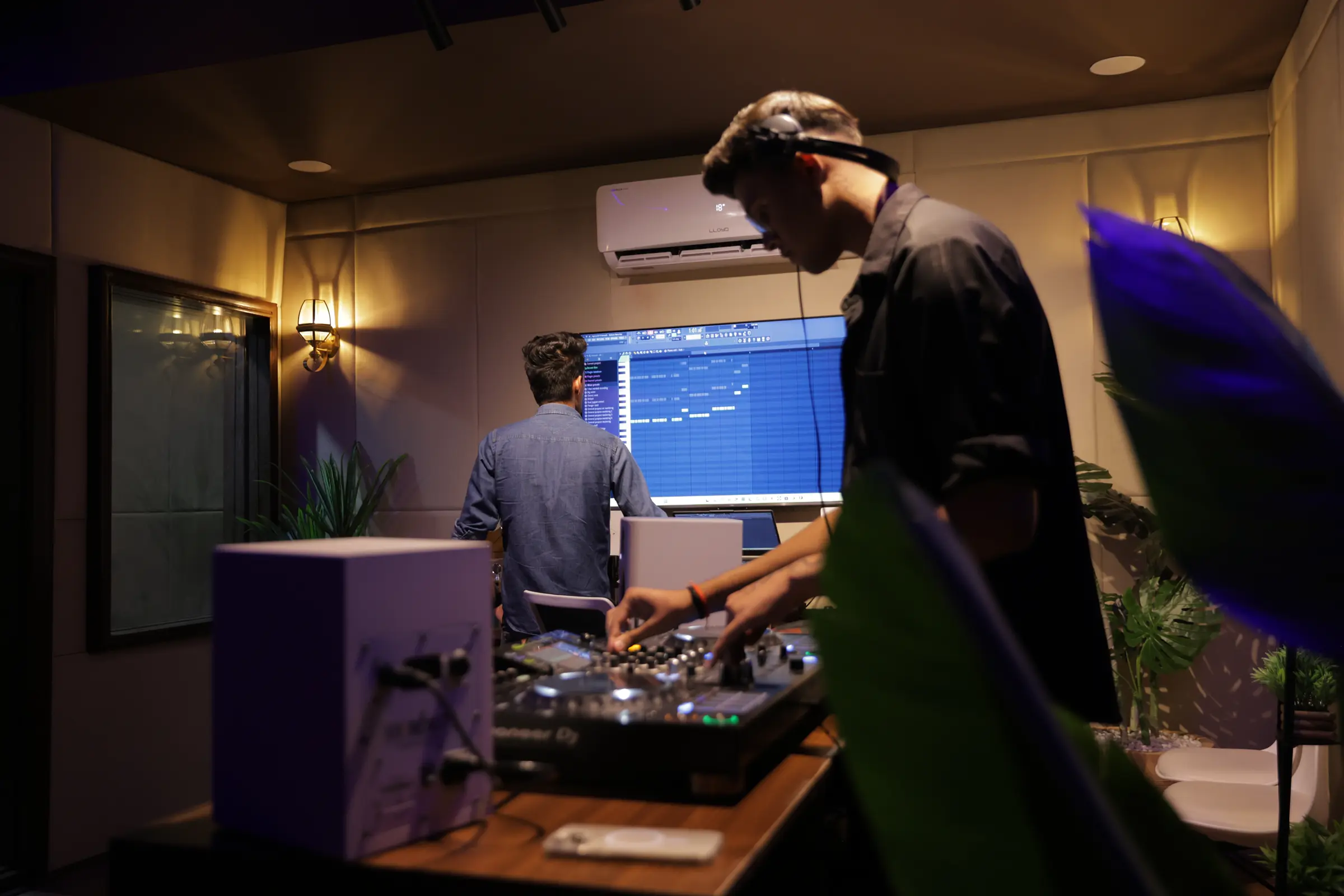
At RMAK Studio, students gain practical experience using professional DJ setups while learning the fundamentals from experienced mentors.
This allows beginners to make informed decisions when purchasing their own equipment in the future.
How RMAK Studio Helps Beginner DJs Learn Faster
Choosing the right DJ controller is important, but learning from experienced professionals can significantly accelerate your progress.
At RMAK Studio, our goal is to help aspiring DJs develop practical skills through hands-on training.
We offer:
Basic DJ Course
Perfect for beginners who want to learn:
- DJ fundamentals
- Equipment basics
- Beatmatching
- Track selection
- Mixing techniques
- Performance confidence
Pro DJ Course
Designed for students who want to take their skills to the next level.
Topics include:
- Advanced transitions
- Creative mixing
- Live performance techniques
- Crowd reading
- Professional workflows
- Event preparation
Students also get exposure to real-world DJ environments and professional equipment setups.
For more details, You can also explore our:
Beginner DJ Practice Routine
Owning the best DJ controller for beginners won’t automatically make you a great DJ.
Consistent practice is what creates results.
Here’s a simple routine beginners can follow.
Week 1: Learn the Basics
Focus on:
- Understanding controller layout
- Learning software navigation
- Loading tracks
- Using cue points
- Basic transitions
Week 2: Beatmatching Practice
Develop your timing skills by:
- Matching BPMs
- Aligning beats
- Listening carefully
- Practicing transitions repeatedly
Week 3: EQ and Mixing
Learn how to:
- Use low, mid, and high frequencies
- Create smooth transitions
- Avoid frequency clashes
Week 4: Build a Mini DJ Set
Create a 15–20 minute mix using your favorite tracks.
Record yourself and identify areas for improvement.
This simple routine helps beginners build confidence and develop strong foundational skills.
Benefits of Learning DJing in a Professional Studio Environment
Many beginners try to learn entirely at home.
While this can work, learning in a professional studio offers several advantages.
You gain access to:
- Professional equipment
- Industry knowledge
- Immediate feedback
- Networking opportunities
- Real-world experience
A structured learning environment can help you progress faster than learning alone.
It also reduces the chances of developing bad habits that can be difficult to correct later.
The Future of DJing
The DJ industry continues to evolve.
Today’s DJs are expected to do more than simply play songs.
Successful DJs often combine:
- Mixing skills
- Music production
- Content creation
- Personal branding
- Social media marketing
- Live performance experience
Learning how to use a DJ controller effectively is just the beginning of a much larger creative journey.
The skills you develop today can open doors to events, collaborations, and exciting opportunities within the music industry.
Final Thoughts on Choosing a DJ Controller for Beginners
Finding the right DJ Controller for Beginners doesn’t have to be complicated.
Start by focusing on functionality rather than expensive features.
Choose a controller that:
- Supports your preferred software
- Offers essential learning features
- Fits your budget
- Allows room for growth
Remember that your skills matter more than your equipment.
The best beginner DJs are those who consistently practice, stay curious, and continue learning.
Whether your goal is performing at private events, becoming a professional DJ, or simply exploring a new hobby, investing in the right beginner DJ equipment and proper training can make all the difference.
If you’re ready to take the next step, explore our DJ Courses, Studio Services, and Contact Page to learn more about how RMAK Studio can help you start your DJ journey.
Frequently Asked Questions
What is the best DJ controller for beginners?
The best DJ controller for beginners is one that offers essential features such as jog wheels, performance pads, software compatibility, and a user-friendly layout. Beginners should focus on learning rather than purchasing the most expensive equipment.
How much should a beginner spend on a DJ controller?
A beginner can start with an affordable controller and upgrade later as their skills improve. It is more important to practice consistently than to invest heavily in equipment from the beginning.
Can I learn DJing without taking a course?
Yes, but a professional DJ course can provide structured learning, mentorship, hands-on practice, and faster skill development compared to self-learning alone.
Do professional DJs use controllers?
Yes. Many professional DJs use DJ controllers for live performances, studio practice, and event setups. Modern controllers offer advanced features suitable for both beginners and professionals.
How long does it take to learn DJing?
The learning timeline varies from person to person. With consistent practice and proper guidance, beginners can learn basic mixing techniques within a few weeks and continue developing advanced skills over time.
Is DJing a good career option?
Yes. DJing can be a rewarding career for individuals passionate about music, live performances, and entertainment. Many DJs also explore music production, event management, and content creation opportunities.
What equipment do I need besides a DJ controller?
Most beginners need a laptop, DJ software, headphones, speakers, and a well-organized music library to start practicing effectively.
Should I learn music production along with DJing?
Learning music production can be beneficial because it helps DJs understand music structure, create original content, and expand their creative possibilities.